NOLLIMEDIA RESEARCH ARCHIVE · 011 — COMPANION TO THE FILM
If you replace a city piece by piece — at what point does it stop being itself?
CYBERPUNK — HONG KONG 賽博朋克之城
SCROLL ↓
That's the central question of Ghost in the Shell — a cyborg whose body has been upgraded part by part until only her ghost is left. Its city is a real place. "When I was in search of an image of the future," director Mamoru Oshii said in the film's production report, "the first thing that came to my mind was an Asian city… so I thought of Hong Kong." His team surveyed it like architects; the film was released in 1995, less than two years before the handover, when nobody knew what would happen next. In a way, Hong Kong itself was the question. This is the research companion to the film: the history, the typologies, the interviews, and everything the edit couldn't hold — checked, sourced, and taken further.
Cyberpunk isn't just an aesthetic — it's a set of assumptions the genre ships with: a city stacked in three dimensions, public life routed through private space, a system optimizing faster than anyone can hold on to what it was. Hong Kong is the city where those assumptions were photographed, not invented. Before you can imagine a cyberpunk city, you have to meet the real one.
In a parallel world, Hong Kong looks very different. When the British counted their new island in 1841, they found 7,450 people in sixteen villages — about a quarter of them living on boats. What turned that coastline into this was a drug war, two treaties, and the strangest clause in urban history: a 99-year lease with an expiry date every resident could read.
Scroll through the timeline. The thing to watch isn't the dates — it's the idea that takes shape between them: a world city built, knowingly, on borrowed time. And in those 99 years, a lot of things happened.
1839 鴉片貿易
The Opium Pretext
Millions across China are addicted to opium — sold by British traders to fix their tea-driven trade deficit. China seizes and destroys more than 20,000 chests at Humen. Britain's response is war.
1842 割讓香港
Ceded in Perpetuity
China loses the First Opium War, and as part of the settlement Britain takes Hong Kong Island — the Treaty of Nanking cedes it 'in perpetuity.' A city begins as a clause in someone else's contract.
1860 九龍半島
Kowloon Crosses Over
The Second Opium War ends with the Convention of Peking, and the Kowloon Peninsula — the far shore of the harbour — joins the colony.
1898 九十九年
The 99-Year Lease
Britain realises the island is useless without the land behind it — and leases the New Territories, ten times what it already held, rent-free, for exactly 99 years. 'Don't worry, we're gonna give it back. In 1997.'
1949 難民湧入
Refugees Pour In
After the war and the revolution, a million and a half people cross the porous border in six years — keeping their lives, and their property, under a system that let a family own, inherit and borrow while ownership was being abolished across the border.
1953 石硤尾大火
The Shek Kip Mei Fire
A squatter-settlement fire on Christmas night leaves over 53,000 people homeless by morning — and launches the public-housing programme that will one day build Choi Hung Estate.
1984 中英聯合聲明
The Countdown Becomes Real
The Sino-British Joint Declaration confirms what the lease always implied: the whole colony returns when the clock runs out. A declassified memo had already told London the ceded core was 'not viable on its own' — the colony was one organism.
1997 回歸
The Handover
By the time the flag comes down, Hong Kong has a free press, an independent judiciary, Cantopop, kung fu cinema, cha chaan teng on every corner — a whole way of being that didn't quite belong to anyone else.
SCROLL — TIME MOVES WITH YOU ↓
DEEPER — THE LEASE NEVER ENDED, IT MULTIPLIED
Here's the part we couldn't fit in the film: nobody in Hong Kong owns land. Virtually every square foot is leased from the government — and before 1997, New Territories deeds were written to run "99 years less three days," expiring on 27 June 1997, three days before the flag came down. The countdown wasn't only on the flagpole; it was in the mortgages. It still is: the leases were rolled forward to 2047, and selling land-time remains a pillar of public revenue.
Even the ground is borrowed — from the sea. Stand on Queen's Road Central and you're standing on the shoreline of 1841; roughly a quarter of the developed city is built on land reclaimed from the harbour. A city on a lease, on ground it manufactured itself. No wonder permanence never settled in.
Fig. 01 — The Opium Den
From the film: the trade that paid for the flag. We rebuilt the tableau from period images rather than show the usual sanitized maps.
Fig. 02 — A Lot of Things Happened
The film's timeline plate: engraving turns into neon as 1898 approaches 1997 — occupation, refugees, the Shek Kip Mei fire, the factory boom, the MTR. The old atlas literally becomes the neon city.
"Tong lau" literally means Chinese building — the counterpart of the yeung lau the British built for themselves. Shops on the ground floor, families stacked above, maybe a factory in the back. When the refugees poured in and Hong Kong's population doubled and doubled again, this was the building that absorbed it all.
From about a thousand registered factories in 1947 to more than ten thousand two decades later — and a lot of them ran inside tong lau. Fabric wheeled in from the docks at dawn; shirts, wigs, plastic flowers stitched on the upper floors; boxes stamped "MADE IN HONG KONG" and shipped to Macy's and Marks & Spencer by nightfall. The whole life cycle of a product, compressed into one address. And under British law a Chinese family could own that address — pass it down, borrow against it — while ownership was being abolished across the border. So the money moved here.
Today the tong lau are coming down — old, out of code, worth less than the land under them. When one is "saved," what's saved is often just the façade: tenants out, boutique in where the sewing floor used to be. The exceptions are instructive. A 1926 corner tong lau in Sheung Wan — one of the last half-dozen of its kind — kept its hand-carved terrazzo signage and its social life: the ground floor is a free community living room now. It was only possible by removing the pressure for profit from the equation. Remember that sentence.
DEEPER — TWO THINGS THE FILM HAD NO ROOM FOR
The tong lau's proportions aren't tradition — they're legislation. After the 1894 plague tore through Tai Ping Shan, the 1903 building ordinance fixed the type's depth at forty feet on narrow lots; ordinances have been quietly drawing this city's architecture ever since. Keep that in mind for everything that follows.
And follow one plastic flower far enough and you reach a punchline: the workshop that made them grew into Cheung Kong — founded 1950 as a plastics factory, pivoting to property from 1958 — Li Ka-shing's empire, the developer whose towers now stand where sewing floors were. The machine that built this city is the machine replacing it.
There's also a missing link between the tong lau and the tower: the "composite building." The mid-fifties rules allowed nine storeys with no lift, and the type ballooned — its most famous survivor is Chungking Mansions (1961): five 17-storey blocks, four thousand residents, and, in anthropologist Gordon Mathews' count, traders from over a hundred nations a year — at its peak, as much as a fifth of sub-Saharan Africa's mobile phones passed through its stalls. Tong lau logic, scaled until it became "the most globalized spot on the planet."
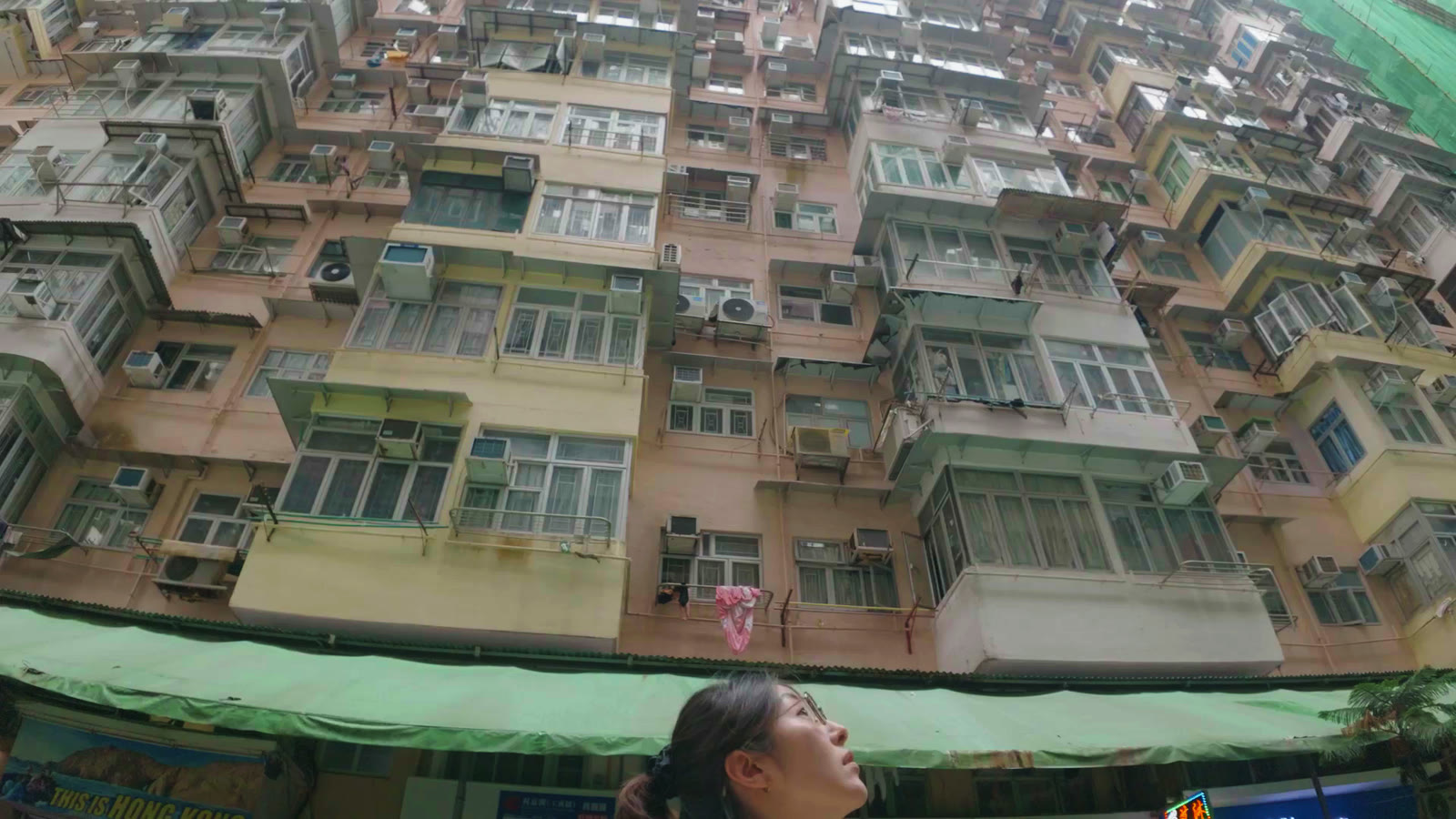
Fig. 03 — Stacked Living
To Kwa Wan's Thirteen Streets: 83 walk-up blocks, built 1958–60 and held to eight storeys under Kai Tak's flight path — the postwar ordinance generation, tong lau logic at maximum legal size.
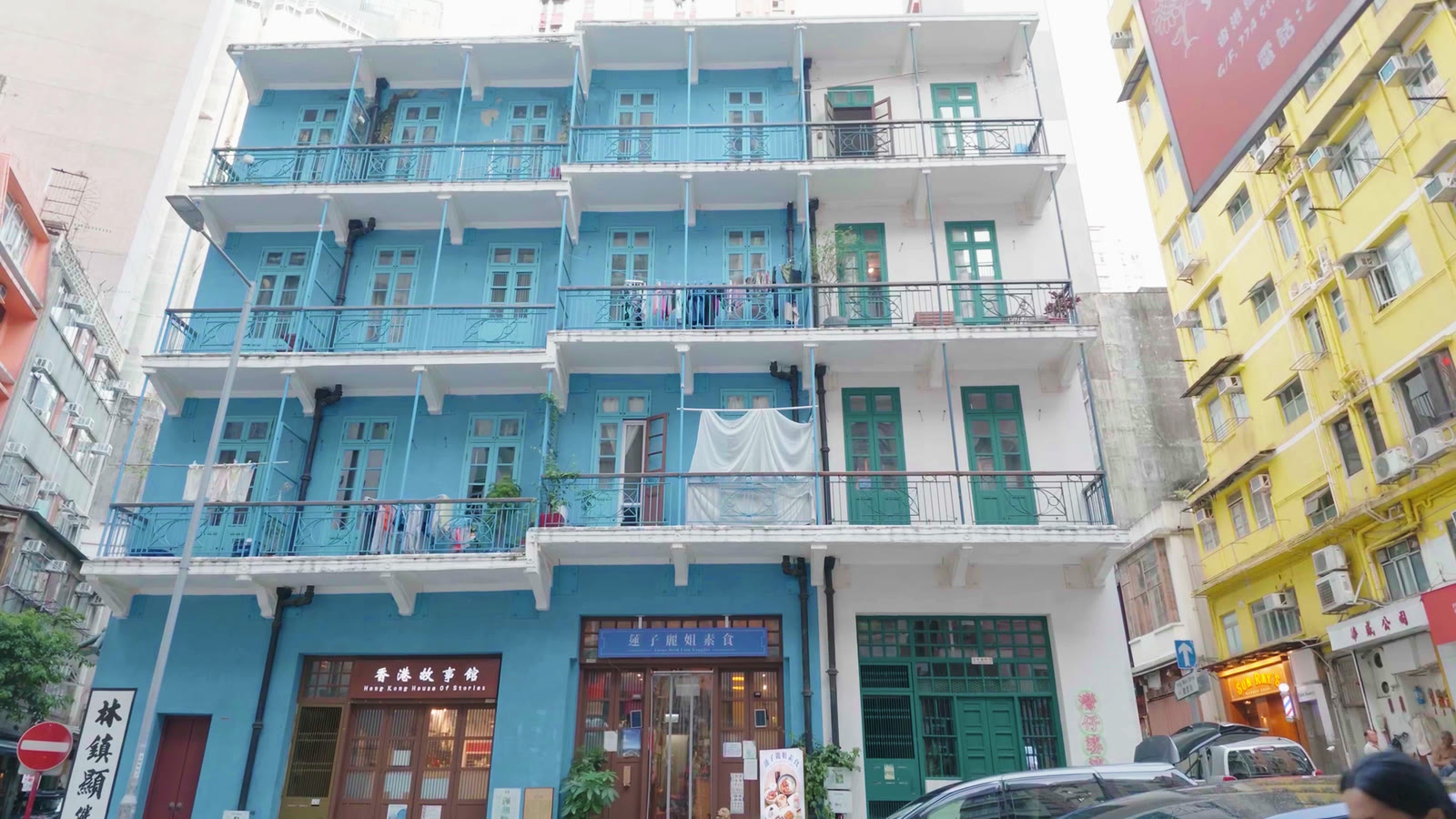
Fig. 04 — Saved, With Its People
The Blue House cluster in Wan Chai — renovated with its tenants in place, eight families staying through the works. It won Hong Kong's first top UNESCO heritage award for exactly that: keeping the life, not just the shell.
Every time one disappears, it takes the memories with it.
From the film — on the tong lau
THE QUINTESSENTIAL HONG KONG VALUE
EFFICIENCY + PROFIT
Engineered to perfection — everything about this city's architecture comes back to these two ideas
Start underground: the MTR's first line opened in 1979, and instead of building the city first and adding trains later, Hong Kong built the trains and let the city grow around them. The Rail-plus-Property model is a perpetual motion machine — the MTR develops the land above its own stations, property revenue funds the railway, the railway raises property values. In 2015 fares alone covered 187% of operating costs — the highest farebox recovery ever recorded; even in the worst pandemic year it stayed above break-even. New York's subway recovers less than a third.
Above every station, the same section repeats: station at the base, shopping podium on top, residential towers above that — the architects we met call them birthday cake developments. Stack hundreds of them side by side, string them together with escalators, footbridges and malls, and the whole city starts working in three dimensions. The fastest way around stops touching the street. Scroll to climb the section.
±0 m
ALTITUDE
0/ 731 PUBLIC FOOTBRIDGES ALONE
±0 m
The Ground 地面
Trams, taxis, wet markets, queues. In most cities the ground isn't just how you get around — it's where life happens. Hong Kong is the city that questioned that assumption.
+15 m
The Bridge Layer 天橋層
Footbridges added over decades by different developers, until they all connected into one continuous network. The fastest way across Central stopped touching the street.
+135 m
The Escalator 扶手電梯
A chain of some twenty escalators and walkways, 800 metres long, climbing 135 metres — about 80,000 trips a day. Audited in 1996 as 'a costly white elephant,' it invented a neighbourhood instead: SoHo. And every morning it runs downhill, then turns around at ten and climbs for the rest of the day.
SCROLL — THE CITY CLIMBS ↓
PEDESTRIAN SCALE VS THE WORLD — THEIRS ARE MEASURED, HONG KONG'S IS NOT
DEEPER — THE NETWORK WAS BORN PRIVATE, AND WHERE IT ENDS
The elevated city has a birthday: in the mid-sixties Hongkong Land built an air-conditioned bridge over Chater Road so hotel guests could reach the shops without crossing the street, then bridged Connaught Road in the early seventies — a landlord's convenience that grew into a public organ. And at Kowloon Station you can see the system's end state: one podium the size of a financial district — mall, 5,800 flats, the tallest tower in the city — where airlines let you check your luggage before you board the train. Plane to apartment, and your shoes never touch Hong Kong.
Fig. 05 — The Guidebook
The film holds this book up on camera: a real guidebook literally called Cities Without Ground. Our Featured Source — see the Syllabus.
Fig. 06 — Anatomy of a Birthday Cake
From the film: station in the base, mall in the podium, towers as candles — and every pedestrian flow routed through the shopping levels. The atrium becomes your de-facto public square.
Fig. 07 — Mall City
Multiply the cake and link the podiums: one continuous elevated mall circuit, while the street below dims. There's a whole book about this too — Stefan Al's Mall City.
Fig. 08 — Infrastructure as Calligraphy
The looping bridge at Victoria Park. Once you decide pedestrians never meet traffic, even a footbridge becomes a signature.
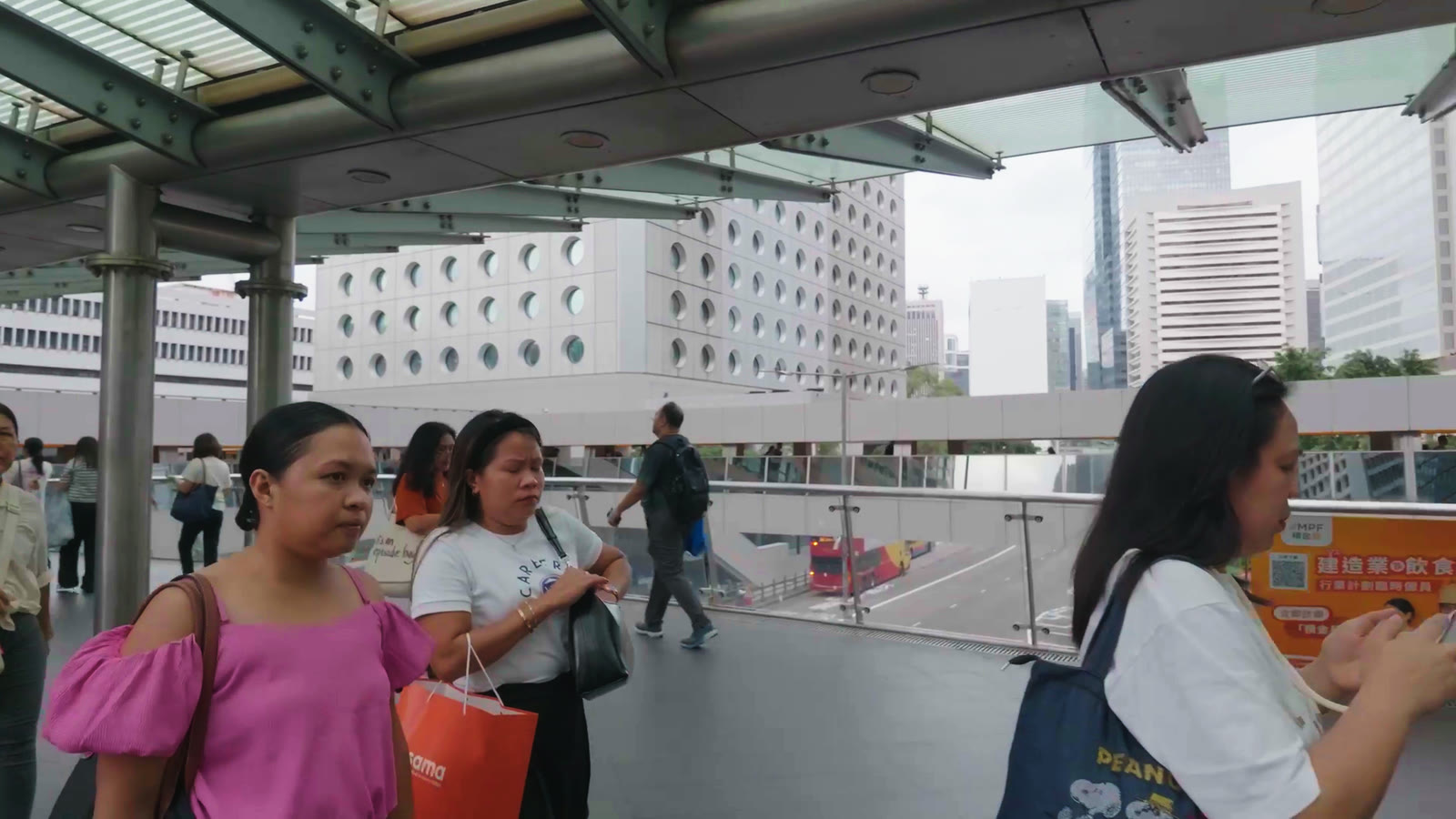
A street that weaves in and out of malls — somebody paid to build it. Most of Central's elevated network is privately owned, attached to malls and offices. There are lists of things you're not allowed to do, and at some point you're strongly encouraged to buy something. The ground was never just circulation; it's where public life happens — hanging out, meeting up, without buying anything. Hong Kong engineered a city that quietly priced that out.
Then, every Sunday, the arrangement inverts. Hong Kong's 368,000 foreign domestic workers are required by law to live in their employers' homes — so on their one day off there's nowhere private to go, and at a wage set apart from the minimum-wage ordinance, cafés aren't an option either. So the city's most invisible workforce claims its most corporate spaces: the footbridges, the plazas, and the open ground floor under Norman Foster's HSBC tower — the icon we all studied in architecture school, its floors hung from steel masts so the ground level could stay open as covered "public space."
DEEPER — THE DAY 'POPS' GOT A NAME
In 2008 Hong Kong learned a new phrase: privately owned public space. The piazza at Times Square — dedicated to "pedestrian passage and passive recreation" under a 1992 deed, in exchange for extra floor area — turned out to be policing sitters while renting the "public" square for up to HK$124,000 a day. The government's first register of such spaces followed within weeks; design guidelines by 2011. Urbanists, meanwhile, have a name for what the workers build every Sunday — the scholar Lisa Law called it cosmopolitan public space: cardboard walls, rooms, addresses, a city made weekly and dismantled by dusk. The only architecture in Central that's actually public.
The same logic also runs pointed downward. As the official count of street sleepers nearly tripled between 2013 and 2022 — 595 to 1,582 — studded ground spread under flyovers and armrests split the benches. Design against resting: the genre calls it dystopian worldbuilding; here it's procurement.
Fig. 09 — Chater Road, Sunday
The Sunday closure began in 1982 — proposed by Hongkong Land to steer shoppers toward its malls. The workers claimed it instead: the banking district's ceremonial street, floored with picnics.
Fig. 10 — The Undercroft
Foster hung the whole tower from steel masts so the ground floor could stay open. The most radical structure of the 80s, and its greatest legacy is a dry place to sit on Sunday.
Fig. 11 — Where Public Life Happens
From the film: the ground isn't just how you get around. The glowing figures are the point — people hanging out, meeting up, without buying anything.
Fig. 12 — The Green Paradox
From the film: the country parks are real and vast — two-fifths of all land. But they're not where the workers are, and in summer heat and sudden rain, open space is not shelter.
Fig. 13 — The Market That Stopped the Machine
Central Market, 1939 — the Bauhaus-lineage market hall the land-sale queue nearly ate. Closed 2003, pulled back after a public campaign, reopened 2021. Its atrium is the rarest thing on this page: a pause.
You only see the system — the diagram, the efficiency, the cleverness of it. You admire the machine from the top down. But the reality is always more nuanced than that.
Dami — on the architect's blind spot
Choi Hung — "rainbow" — is one of Hong Kong's oldest and most iconic public housing estates: eleven blocks, deliberately staggered heights, a shopping centre, schools, a wet market, and of course the basketball court. A tight-knit mini city where shopkeepers know every family by name, and people have lived in the same block for fifty years.
The case for demolition is the engine again: the buildings are old, the waitlist for public housing peaked at over six years, and the Housing Authority is measured on exactly that — units delivered. Rebuilding adds 1,800 flats on the same land, up to modern code, in three phases running from 2028 to around 2049 — a twenty-one-year unmaking. Even if a retrofit could work, rebuilding is what the system rewards. For the film we interviewed Don Hong — a KPF architect with the Save Choi Hung Estate research group — who is trying to make the alternative legible to the spreadsheet.
DEEPER — WHY A HOUSING ESTATE WON A MEDAL
A decade before the rainbow, "resettlement" meant 120 square feet, a shared tap, and a school on the roof — the Mark I blocks thrown up after the Shek Kip Mei fire. Choi Hung, one decade later, gave every family a self-contained flat and a neighbourhood: the moment Hong Kong stopped storing people and started designing for them. It was also geopolitical theatre — former US vice-president Richard Nixon came in 1964 and served badminton in the courts you've seen on Instagram; Princess Margaret toured two years later. The West's proof that density could be dignity. And the estate isn't alone in the queue: Wah Fu, the 1967 estate that gave working families an ocean view, starts clearing in 2027. The machine works chronologically through its own monuments.
We don't want to preserve the concrete itself. We want to preserve the memory — and bring this kind of memory to the future.
Don Hong, KPF · Save Choi Hung Estate research group
Fig. 14 — The Court
The famous podium: a car park roof that became a civic icon. Nobody designed it to be beloved. It became beloved because it was allowed to be used.
Fig. 15 — EXIT 出口
A void-deck passage at the estate, found sign included. We didn't stage this; the building wrote its own caption.
THE COUNTER-ARGUMENT — TOUR BOIS-LE-PRÊTRE, PARIS
A 16-storey public housing tower built 1959–61, slated for demolition in the early 2000s — until a 2005 competition chose transformation instead. Frédéric Druot with Lacaton & Vassal wrapped the concrete in a three-metre band of winter gardens and balconies. Every apartment grew 25–30%. The tenants never had to leave — most stayed in their own flats while the extensions were craned into place. The whole project cost about half of demolition-and-rebuild, and heating bills fell by sixty percent.
The film opens on this building for a reason. Heritage, community, carbon — those arguments only count if there's a legal framework to make them count. Otherwise the forces that built Choi Hung are exactly the forces that take it down. And that's sad.
The density of Hong Kong is carefully curated. It's not just about stacking buildings.
Don Hong
When you opened a shop, you commissioned a master sign maker — someone who bends the glass tube over a flame and blows into it so the walls don't collapse. Different gases, different colours; three to fifteen thousand volts, and it glows. The sign got passed down to your kids and your grandkids, because the sign becomes the shop. Scroll — each gas ignites.
A GAS FOR EVERY COLOUR — THE CHEMISTRY OF THE CITY'S LIGHT
NEON 氖
Neon for red — the colour the whole craft is named for.
ARGON + MERCURY 氬 + 汞
Argon with a drop of mercury for blue — the cold half of the palette.
HELIUM 氦
Helium for pink — a peach-pink, rare in working signs.
KRYPTON 氪
Krypton for white — a ghostly, lavender white. Apply the charge, and the gas glows.
SCROLL — EACH GAS IGNITES ↓
One honest footnote: the gases are the alphabet, but the trade got most of its palette from phosphor-coated and tinted tubes over argon-mercury. The coatings are the vocabulary.
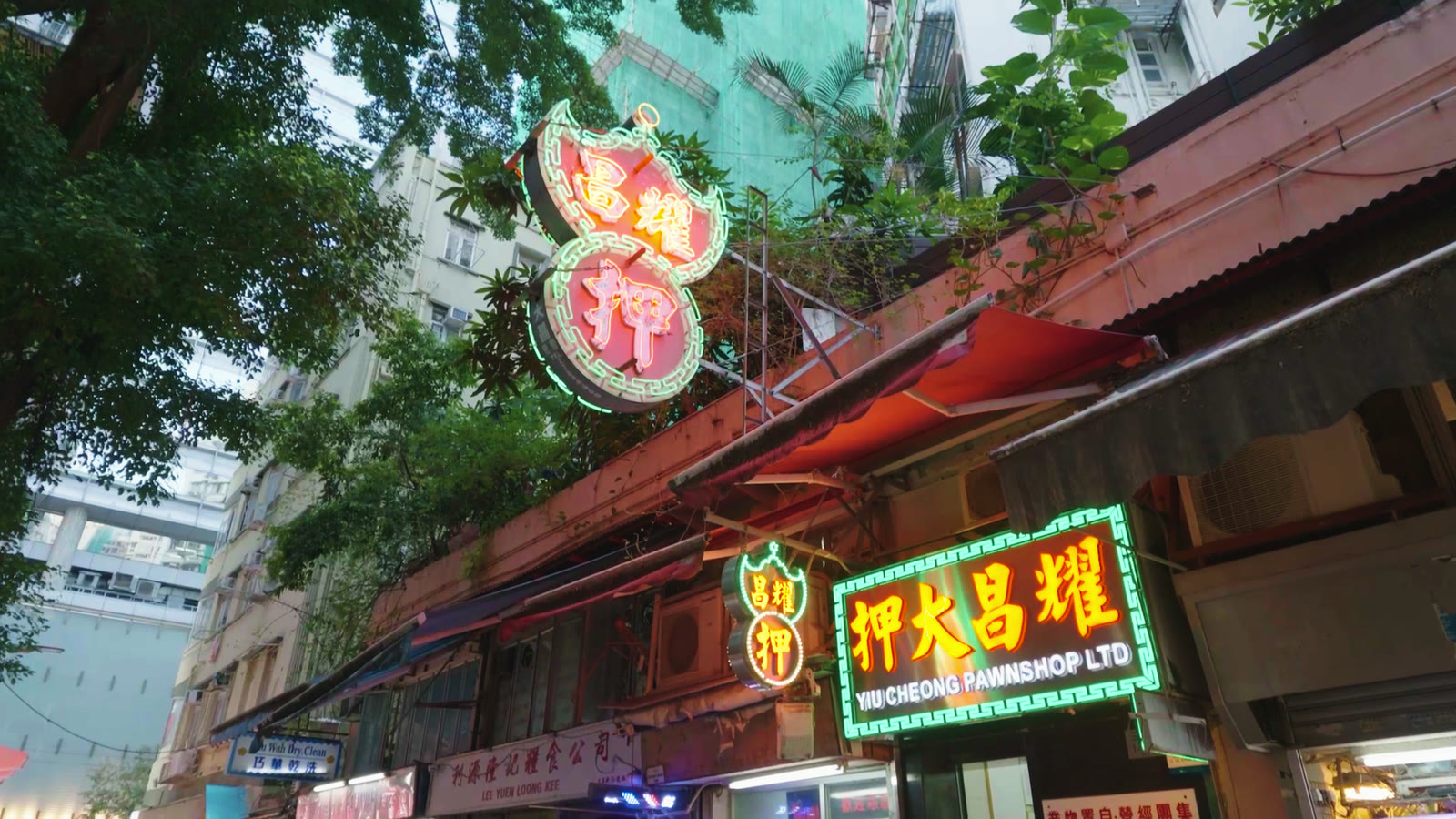
This is the atmosphere of Hong Kong — reds and greens dripping onto wet pavement, the lonely intimacy of Fallen Angels, the city Oshii fell in love with. And over the last decade, thousands of these signs have come down. The rules were always there — projecting signs have counted as unauthorized structures for decades. What changed is enforcement: removal orders nearly doubled between 2015 and 2022, sixty days to comply. The choice: take the sign down, or replace it with a smaller certified LED panel, flush against the wall — at least HK$15,000 in engineering and permits by the estimates we heard, and published cases run far higher. Some shops closed. Some can't afford it. And the ones that could… mostly don't. It pales in comparison to what was there before.
How many hands in this city can still bend a character in glass? Wu Chi-kai — forty years at the flame — counts maybe eight or nine masters left, average age past sixty. The basics take six months; mastery, years. One master, Wong Kin-wah, rebuilt his European burners to run ten times hotter — because Chinese characters bend in ways Roman letters never asked to.
DEEPER — THE ARK
The rescue effort has two wings. M+ began collecting condemned signs in 2013 and holds five, plus the drawing archive of the Nam Wah neon workshop — blueprints of light, acquired 2015. And since 2020 the Tetra Neon Exchange — founded by Cardin Chan — has taken in some sixty dismantled signs at a Yuen Long lot, re-lighting what it can; its 2022 survey counted only about five hundred working signs left on the streets of the city that taught the world the word neon.
Fig. 16 — The Workshop
A master's bench, lit only by the piece he's making. We kept the exposure honest — this is genuinely how dark the room is, one glowing thing at a time.
Fig. 17 — The Cow
Sammy's Kitchen's neon cow — ordered down, then gifted to M+ in 2013. The museum started collecting the signs before it had a building to put them in.
Fig. 18 — What Remains
Walking Mong Kok at night for the film. Fewer tubes than the postcards promise — but when you find one, it still owns the whole street.
Fig. 19 — Behind Glass
The Kai Kee mahjong parlour's rooster — 1976, Kwun Tong — in its museum case against a painted street. Museums let you see history. Keep that thought for the epilogue.
ACT VII — THE FILM'S CLOSING METAPHOR
Piece by Piece 義體
In Ghost in the Shell, Motoko's body has already been replaced piece by piece — arms, eyes, memory; the film opens on her assembly, the famous shelling sequence. Oshii's team built her city the way they built her: they surveyed it. Two sets of Hong Kong photographs — black-and-white for structure, colour for mood — became the blueprints of the future. Scroll through the sequence, and hold the city in your mind while you do.
AFTER THE 1995 SHELLING SEQUENCE — AN HOMAGE, BUILT THE WAY THE FILM BUILT ITS CITY
The only thing the upgrades can't account for is the part that makes her her. The ghost. Keeping it means a slower body, a weaker shell, an older model. So in a system built to optimize — the ghost is the first thing to go.
SCROLL — PIECE BY PIECE ↓
DEEPER — THE SURVEY THAT BECAME A BOOK
The photographs Oshii's team brought home are now architectural history in their own right. Haruhiko Higami's black-and-white structural stills — which included Kowloon Walled City in its final months — and Takashi Watabe's layout drawings toured museums as the Anime Architecture exhibition and became a Thames & Hudson book in 2020. Fans still walk Hong Kong matching the film's frames to surviving corners, shot for shot. The city modelled the future; the model became a monument.
Honestly — we came expecting a story about political pressure, an identity crisis, something being taken from the people. But after talking to people here, the biggest driver of all this change is simpler: efficiency and profit. The same engine that created Hong Kong — now running at a hundred times the speed, on the planet's most expensive housing market, where every square inch has to justify itself.
Memory, texture, identity — they don't add direct value on a spreadsheet, so they're hard to argue for. Especially the cheap neon and the concrete housing blocks: utilitarian, working-class, just background. But sometimes the background is the identity. Museums, photos, films — they let you see your history. Only architecture lets you live in it. That's a gift only architecture can give — and it's the first thing a system built to optimize will take away.
DEEPER — THE CITY ALREADY RAN THE EXPERIMENT
Dami gives the city a hundred years to regret; it has needed about one. In 2006 the Star Ferry pier came down — 150,000 people rode it on its last day, and its clock, by the makers of Big Ben, was crated into storage. In 2007 Queen's Pier followed, over hunger strikes — its numbered pieces still sit in a government explosives depot on Lantau, a demolition the city never quite brought itself to finish. The same year, the wedding-card printers of Lee Tung Street were cleared against the first community-drafted plan ever put to the town planners. One building got the other ending: the State Theatre's concrete rainbow was bought in 2020 in order to be kept — the closest thing our closing line has to a live experiment.
Fig. 20 — The Street That Answers the Question
Our night footage of Lee Tung Avenue is prettier than we knew: the fairy lights hang over what was Wedding Card Street, cleared in 2007. The city has already run the film's experiment — and named the result after the street it erased.
If we look back, 100 or 1,000 years from now, I think we're gonna regret tearing all this down. It'll be nice to know what life actually felt like.
Dami — the film's closing line
Every conversation about cyberpunk Hong Kong eventually reaches Kowloon Walled City — and the film deliberately doesn't. Its story is about the living city, not the famous dead one. But the research kept leading back here, so the booklet keeps it: the enclave excluded from the 1898 lease, ungoverned in practice by either empire, where some three hundred interlocked towers rose without an architect to a density of roughly 1.25 million people per square kilometre — the highest ever recorded — before demolition in 1993–94.
We filmed the bronze scale model in the park at night, and the exhibition recreations nearby — a city mourning a city, in miniature. If the film's question is what a city loses when it optimizes, the Walled City is the inverse case study: the one place the engine never reached, remembered now mostly through photographs — and through the genre it accidentally created.
DEEPER — THE AFTERLIFE
When British forces finally stormed the Walled City in 1899, they found about 150 people and nothing to govern — the enclave's whole history in one anticlimax. Its second life was louder: Greg Girard and Ian Lambot spent four years photographing it before demolition; a Japanese expedition team mapped the dying city room by room, producing the famous annotated cross-section that still circulates online; a 1997 PlayStation game, Kowloon's Gate, resurrected it as a supernatural realm; and Batman's Narrows in Batman Begins is its Hollywood ghost. The densest place ever measured now exists mainly as an image — which may be why the film chose the living city instead.
Fig. 21 — The Warren, Rebuilt
Inside the exhibition recreation: a window opening onto a painted Kai Tak-era panorama. The city can't stop rebuilding the thing it demolished.
Fig. 22 — What Survived
The Qing-dynasty yamen at the heart of the park — the only building that made it out. The oldest structure on the site outlived the newest by a century.
THE VISUAL ATLAS · 研究圖鑑
Everything the edit couldn't hold
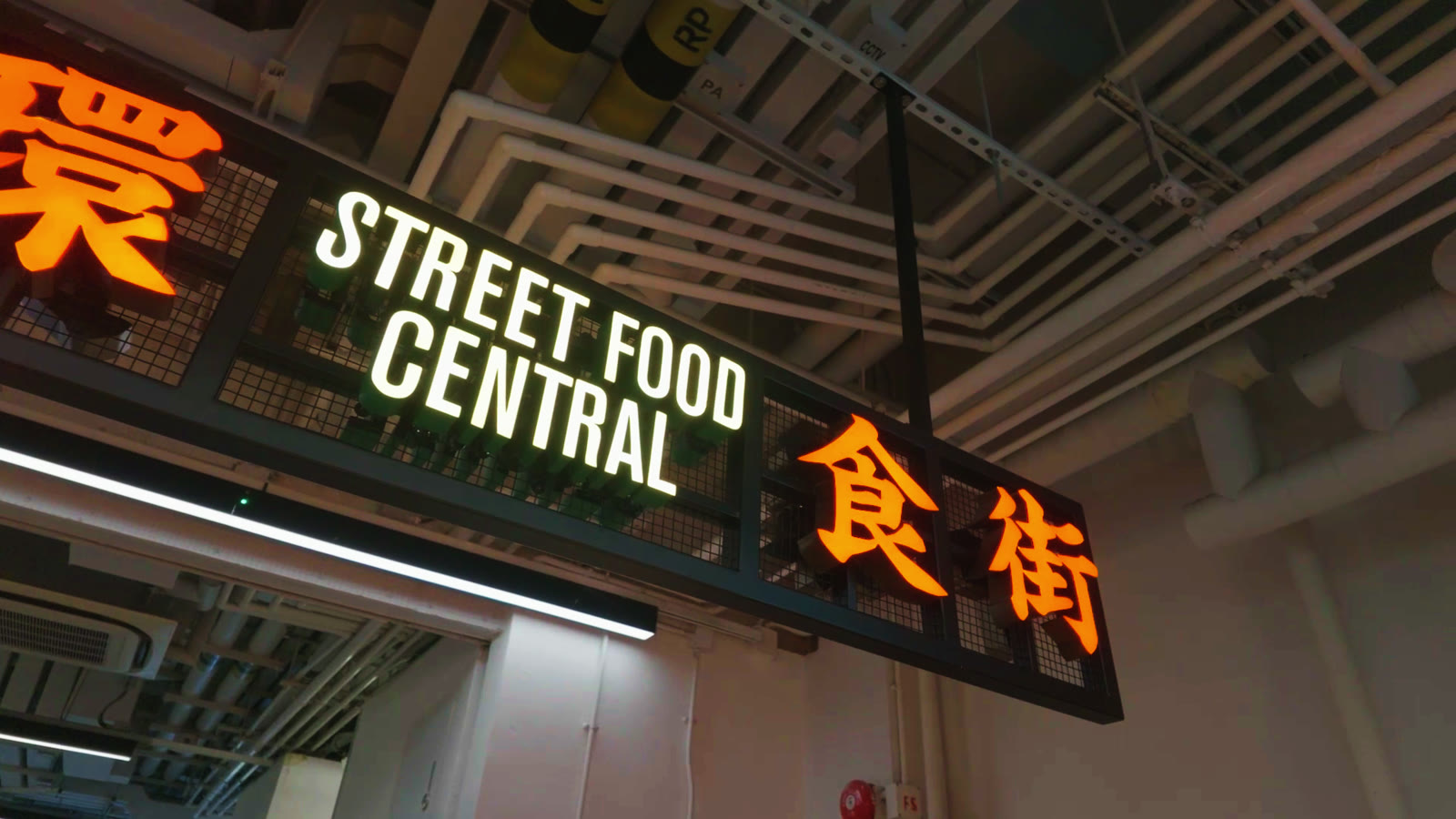
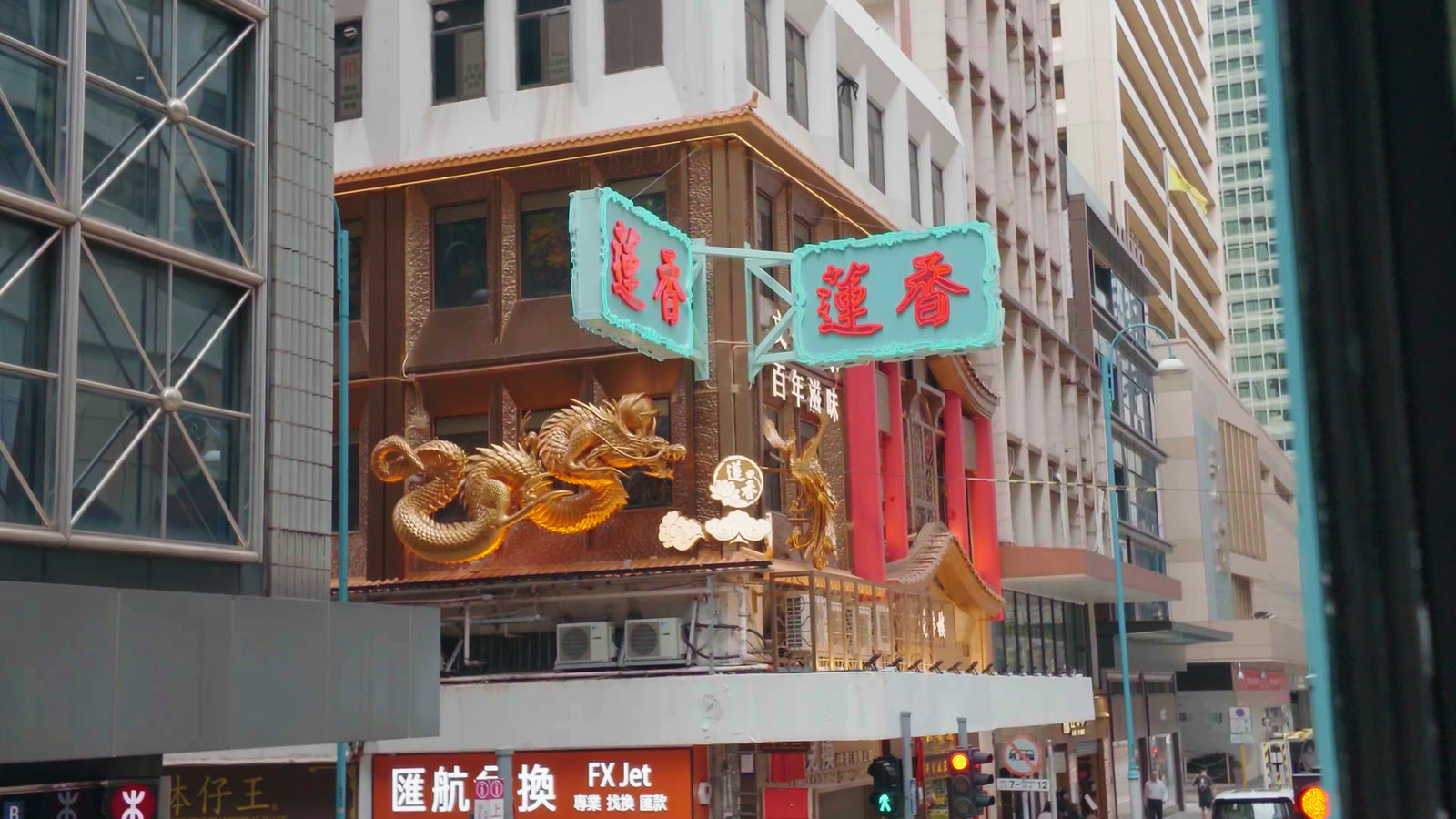
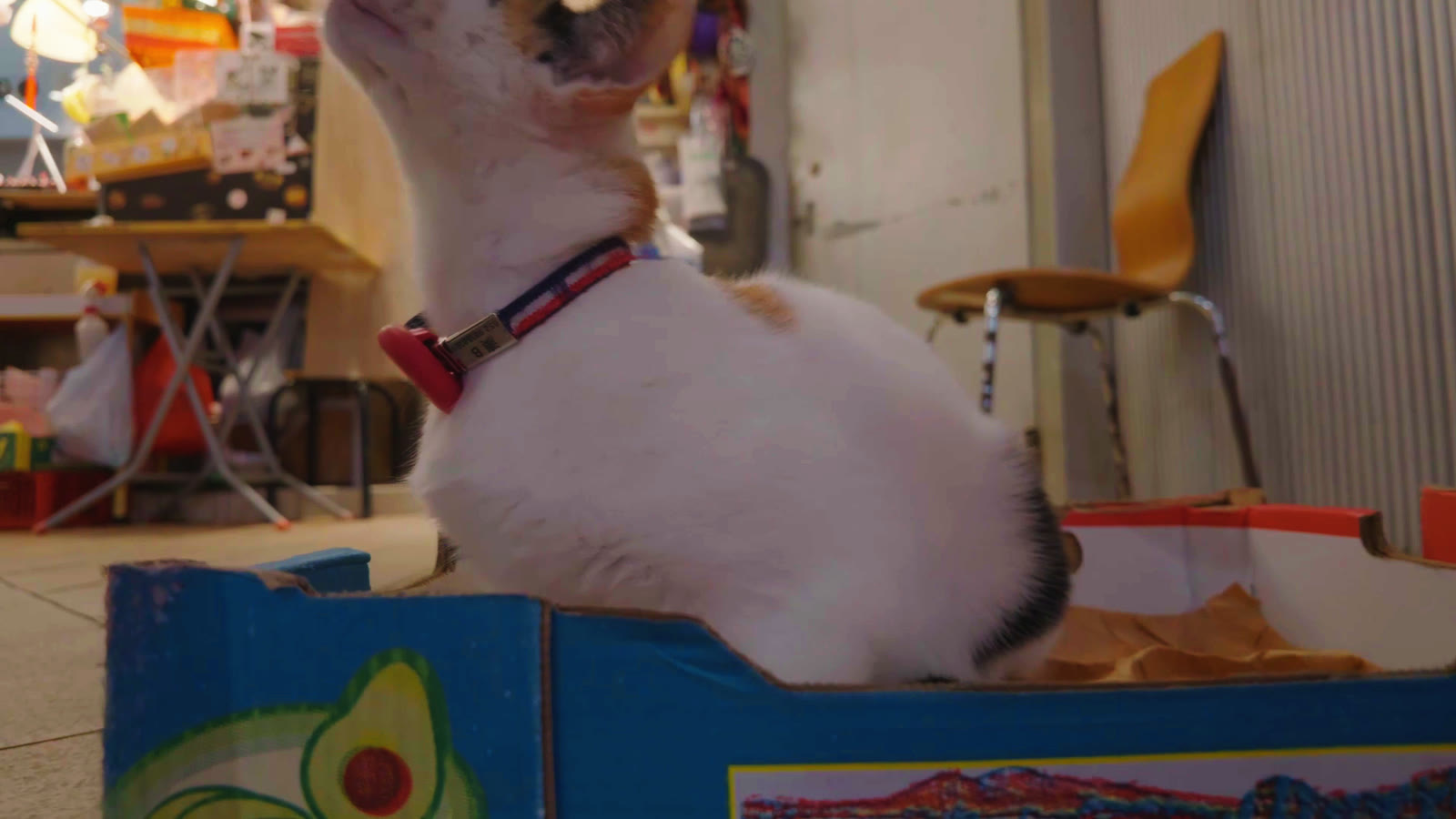
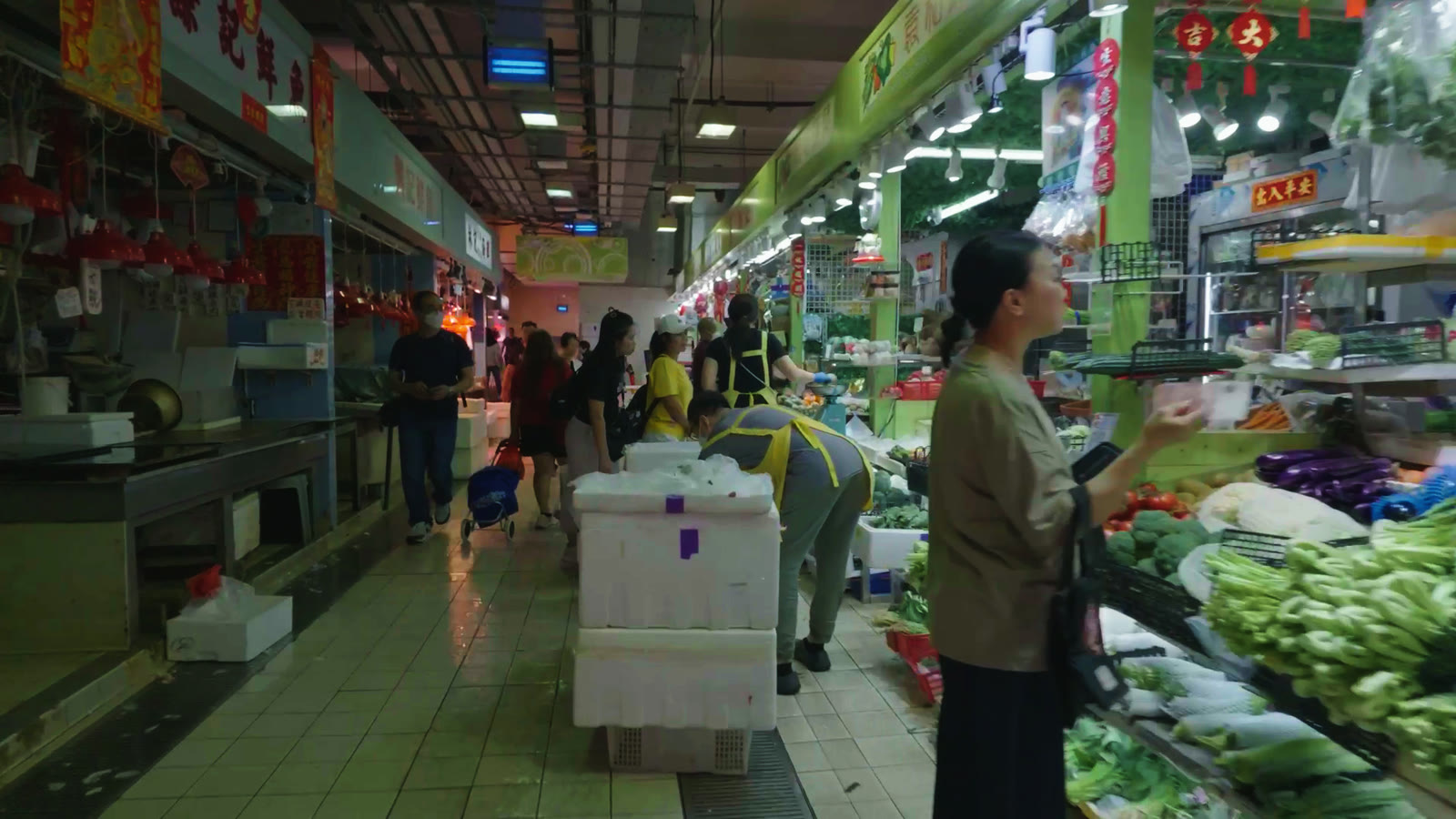
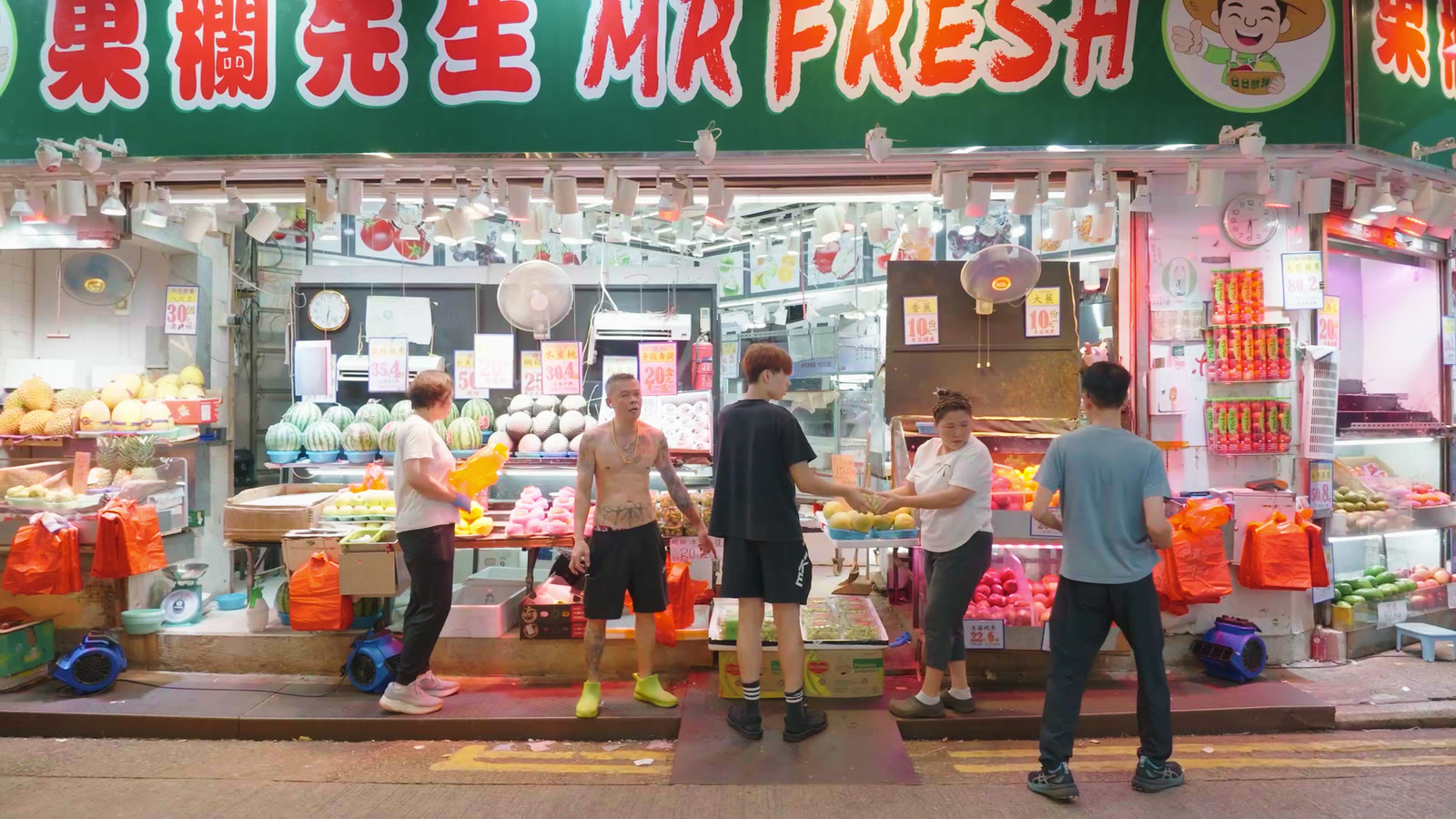
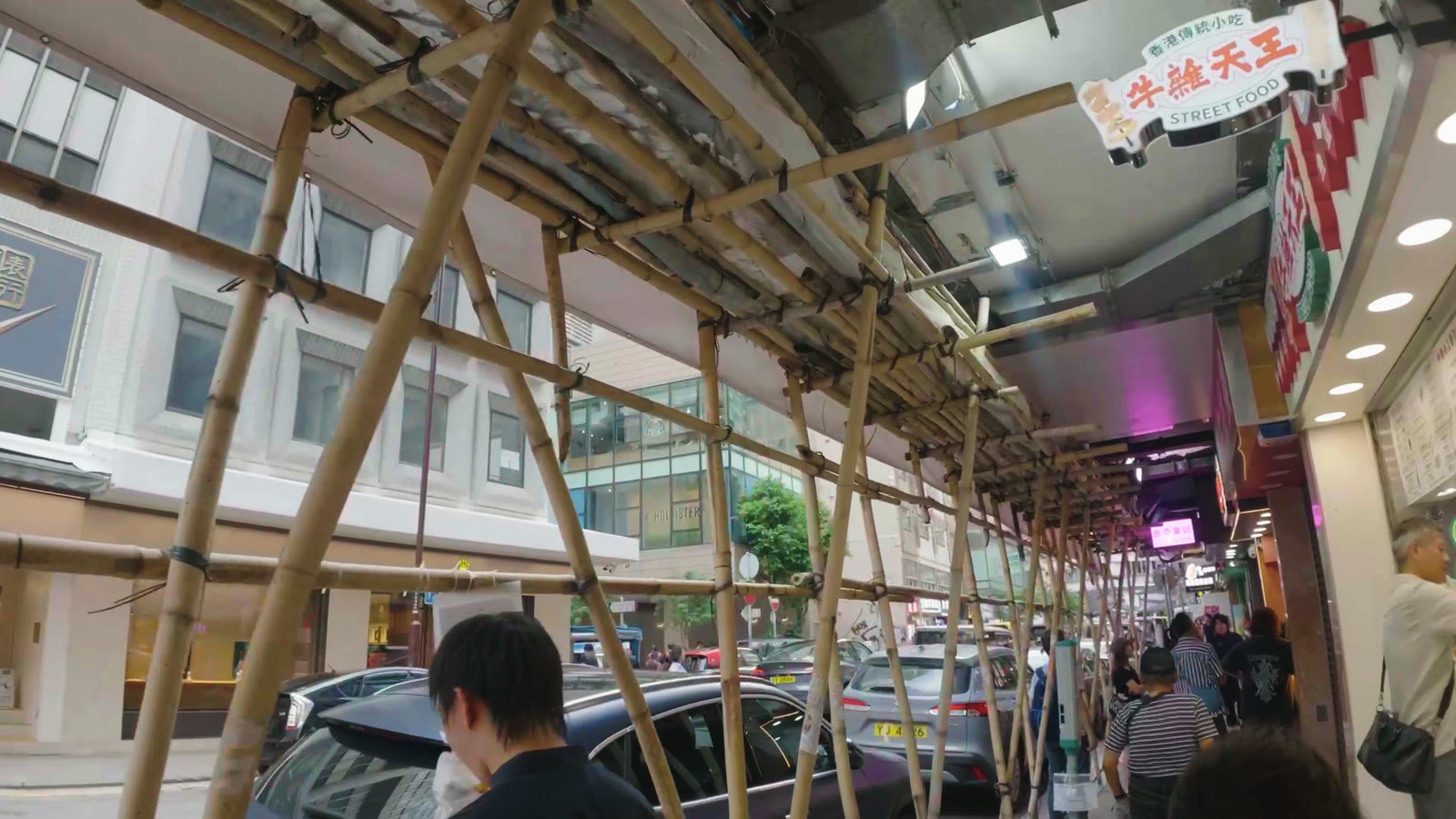
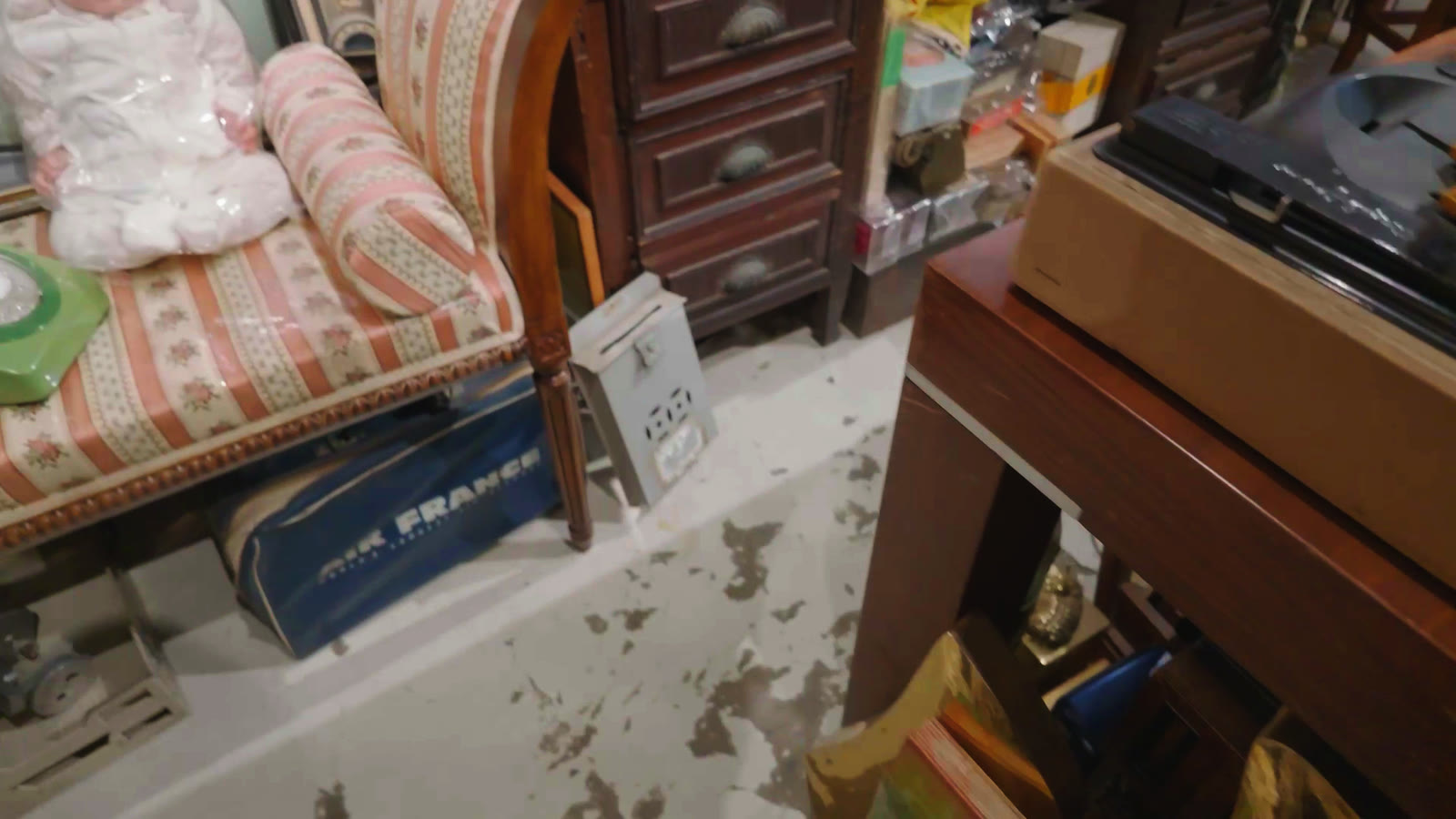
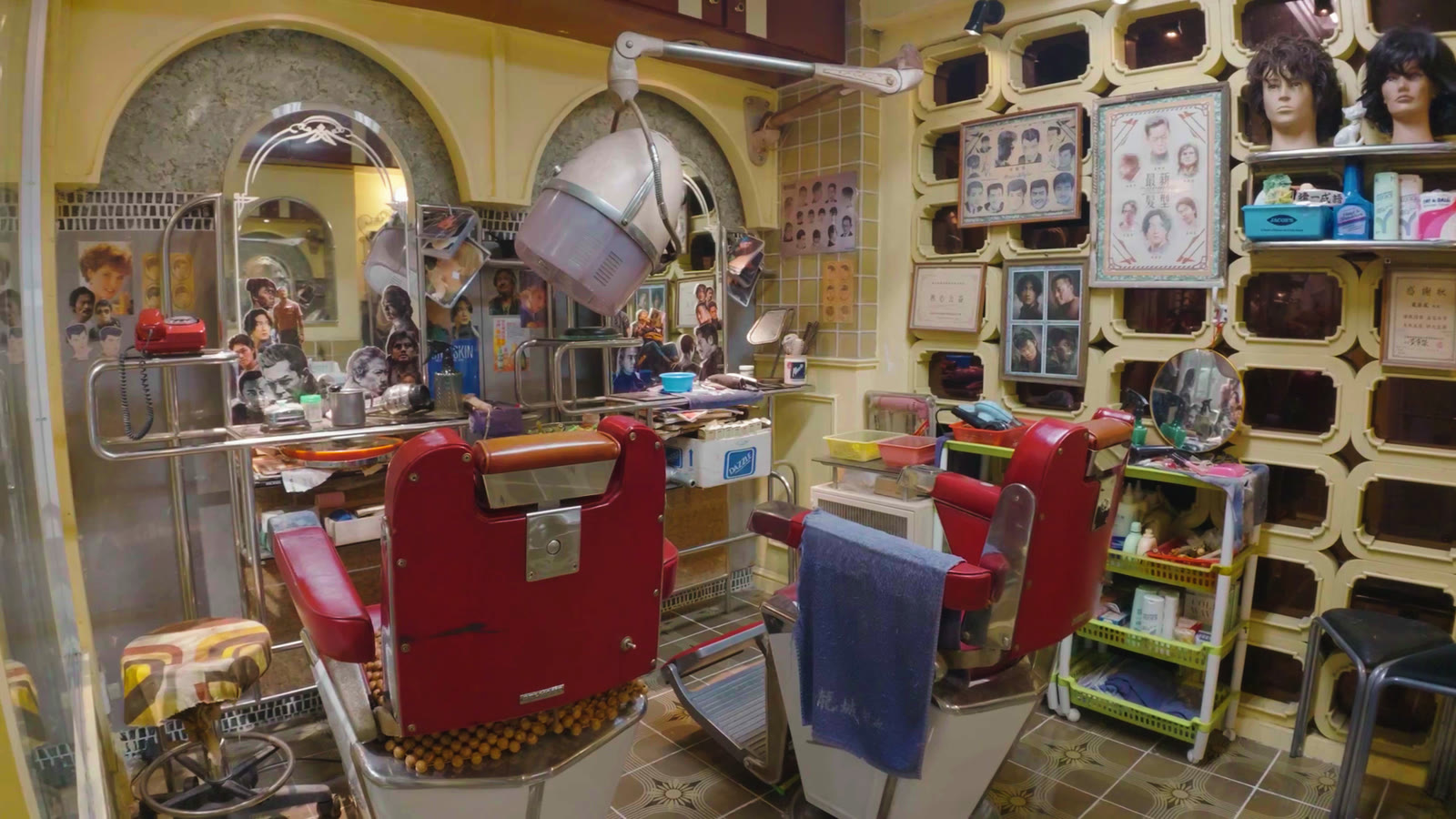
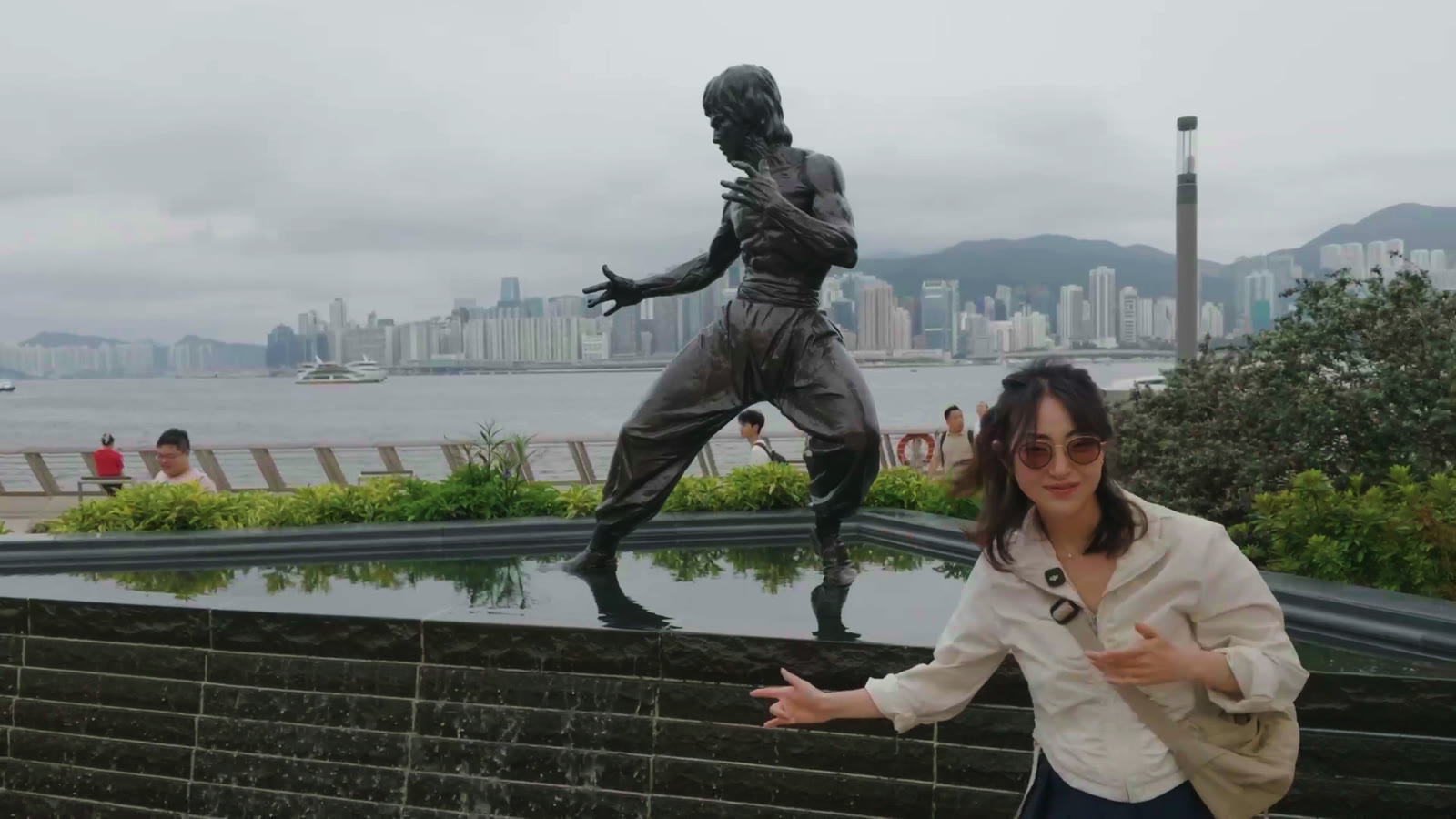
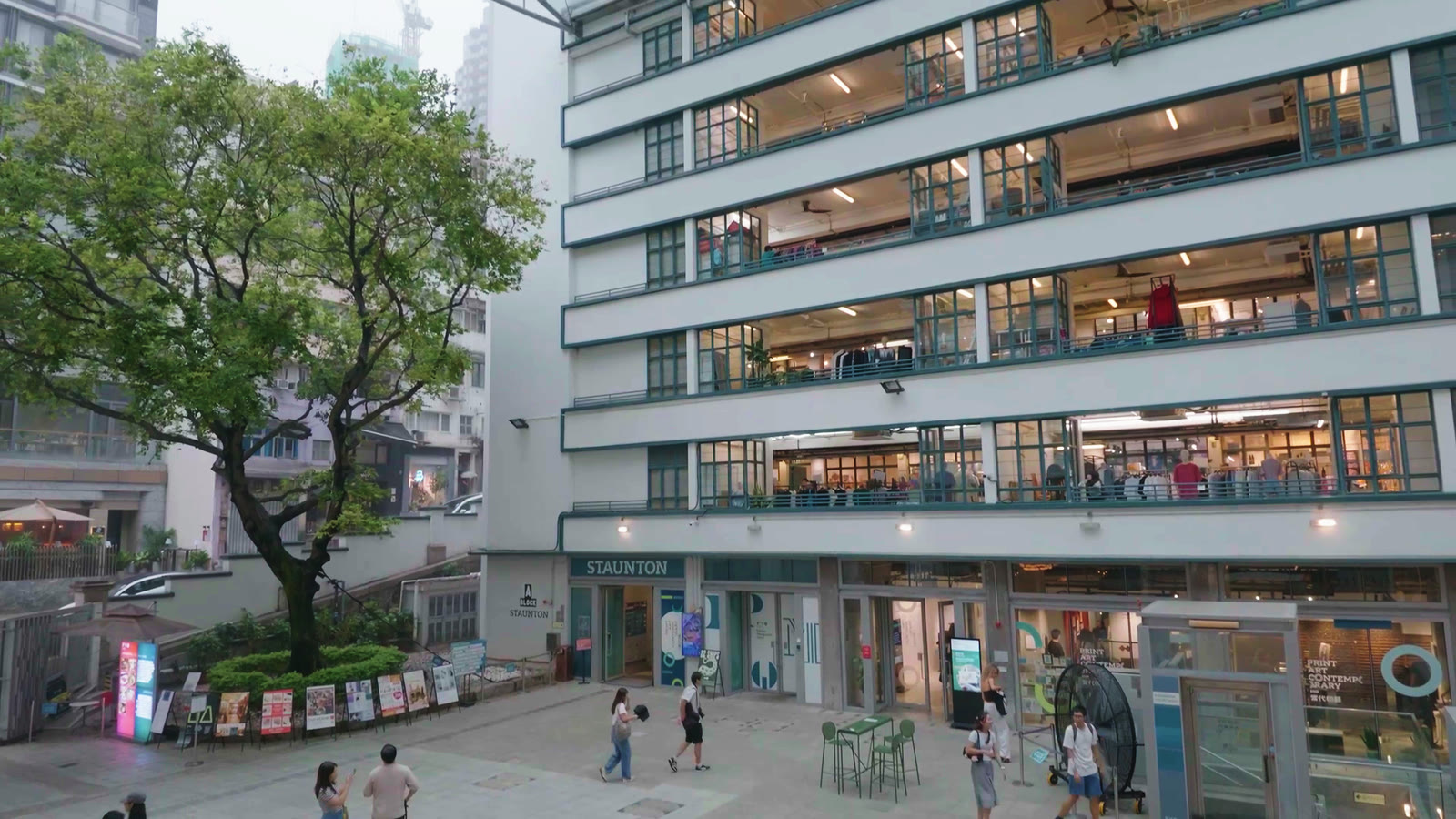
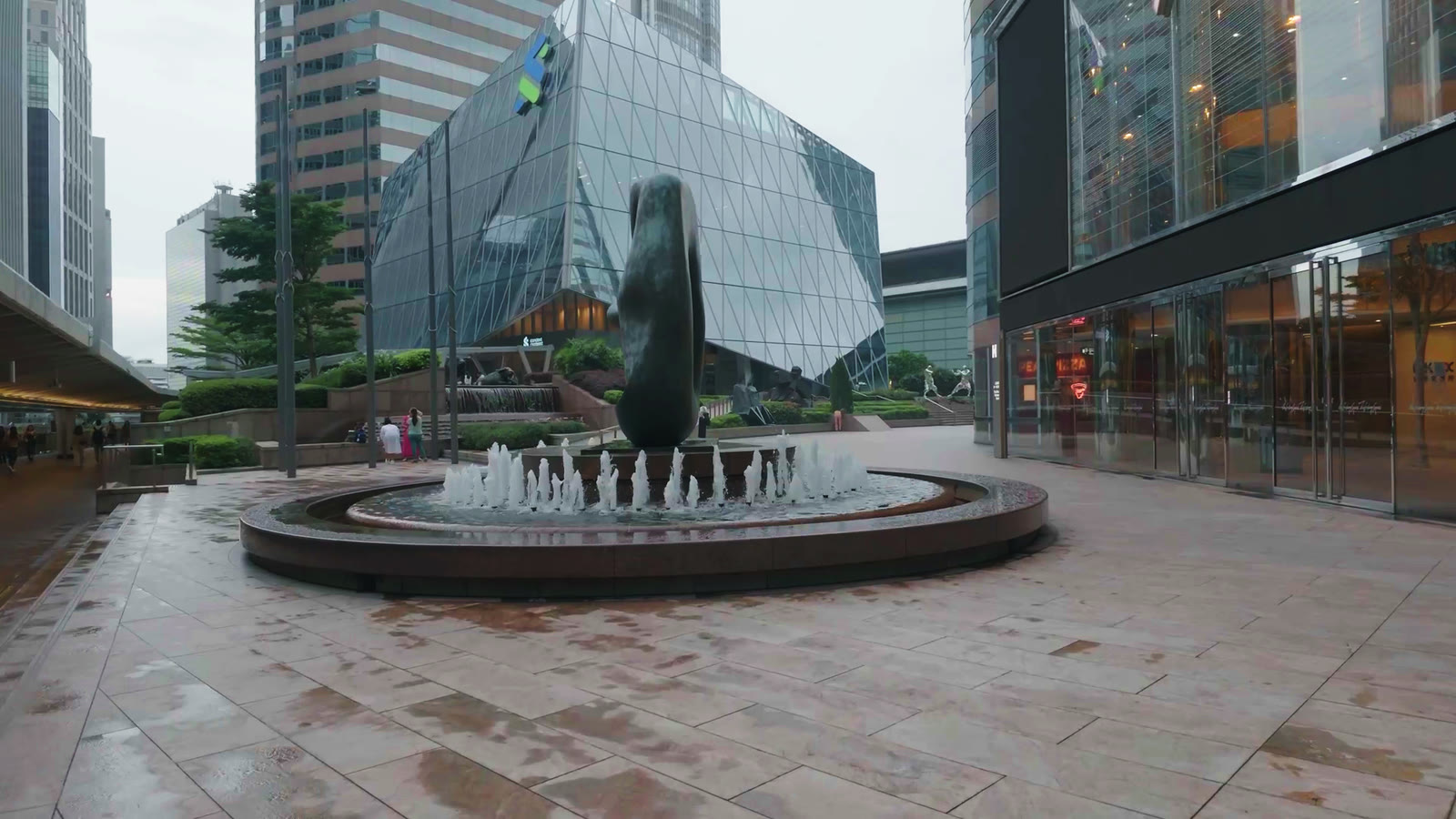
Frames pulled from our own footage — the tangents, textures and small residents of the city that didn't make the final cut. Each one comes with the note from our field log.

THE SYLLABUS · 書目
Twelve sources that actually mattered
Want every paper, thread and dead end? The Complete Research Trail — the full annotated bibliography behind every claim on this page — is a members-only PDF in the Stack below.
THE LEVERAGE STACK · 工具箱
Built to be used
Everything here is a tool, not merch. Pick what you need to build your own world; skip what you don't.
THE DIGITAL — FOR DESIGNERS
THE INTELLECTUAL — FOR WRITERS
THE PHYSICAL — FOR COLLECTORS
Become a member
One membership unlocks every download on this booklet — and on every past and future archive. You're not buying merch; you're funding the research and taking the tools home.
JOIN THE ARCHIVE